 Silk Scarf Factory · From 1 PieceSilk Scarf Factory · From 1 Piece
We print 100% mulberry silk scarves from your artwork, and we start at one piece. Here is what actually happens between sending a file and the cartons leaving Dongguan — including the lead times we quote, and two things we would rather state up front.
Send the file you want printed: AI, PSD, TIFF, JPG or PNG. 150–300 dpi at final size is comfortable; below 72 dpi the print goes soft. Set the canvas to the finished size plus hem allowance — a hand-rolled hem uses 1.5–1.6 cm on each side.
WhatsApp takes single files up to 2 GB, which covers almost every artwork; anything larger goes by email. Send the file with your specs — fabric, momme, size, single or double-sided, quantity.
Your artwork stays with your order. We do not resell it, print it for anyone else, or add it to our sample library without asking.
Every scarf we make is 100% mulberry silk — there is no polyester “imitation silk” in the catalogue. Three fabrics cover most orders:
Prices are quoted per piece in USD, EXW Dongguan: we hand the goods over at the factory, international freight and insurance are on your side. The minimum order is one piece.
One piece is real, but it is not free of physics. Silk comes on fixed widths — 36, 45 or 55 inch — and how many scarves fit across the width decides the price per piece. A 35.4″ square lays out one-up on 36″ fabric; a 21.7″ square fits two across a 45″ width. The layout rules are set out here.
Before bulk production we print a sample and send it to you. Check four things: colour against your reference, pattern registration across the repeat, the hem, and how the fabric feels.
Sampling matters more with silk than with cotton. Silk takes ink differently depending on weave and base shade, so a colour that looks right on screen can shift on a 16 momme charmeuse. Approving a physical sample is the only reliable way to catch that before 500 pieces are printed.
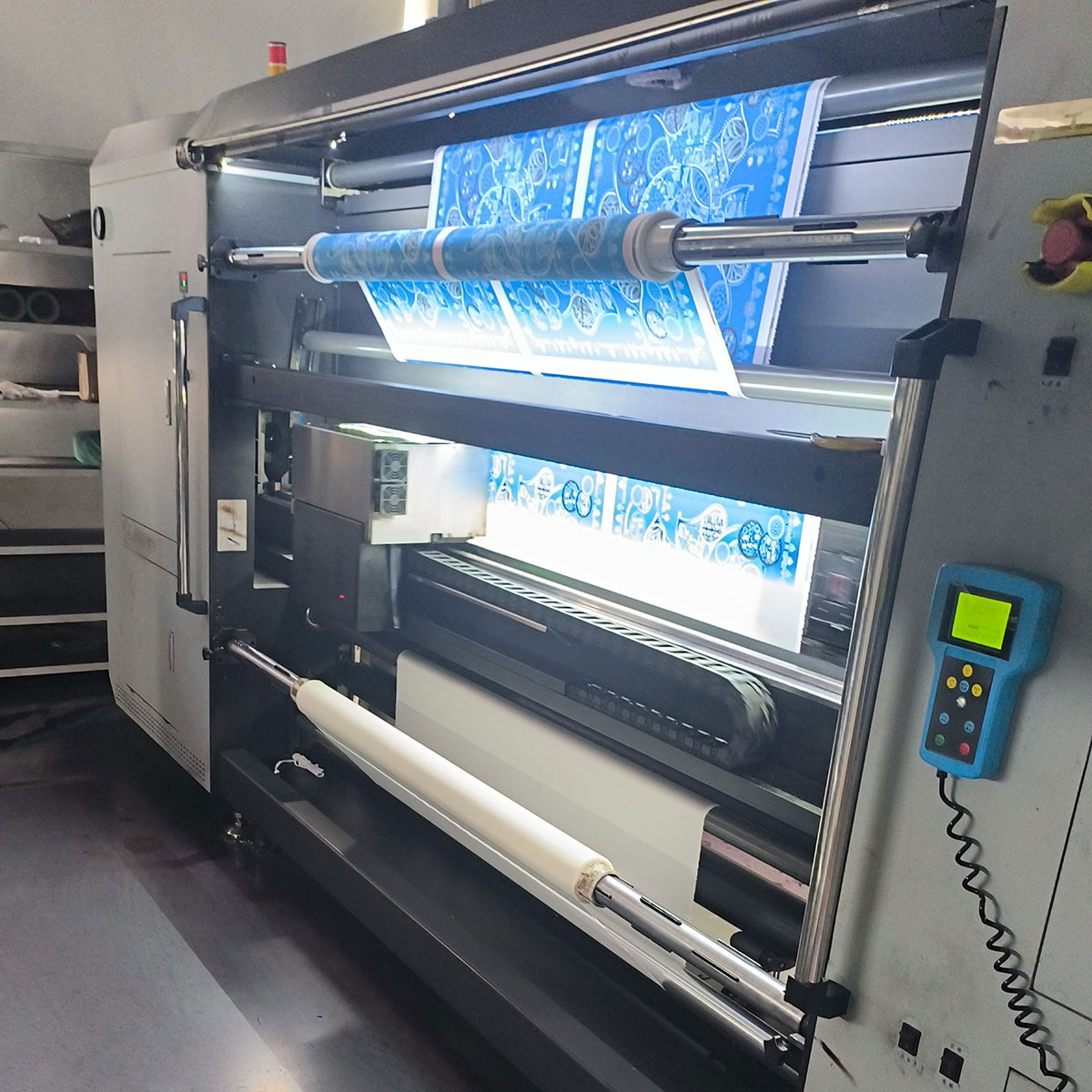
The sequence is: stiffen the fabric, print, steam to fix the dye, wash, then hem. We print digitally throughout — there is no screen printing line here.
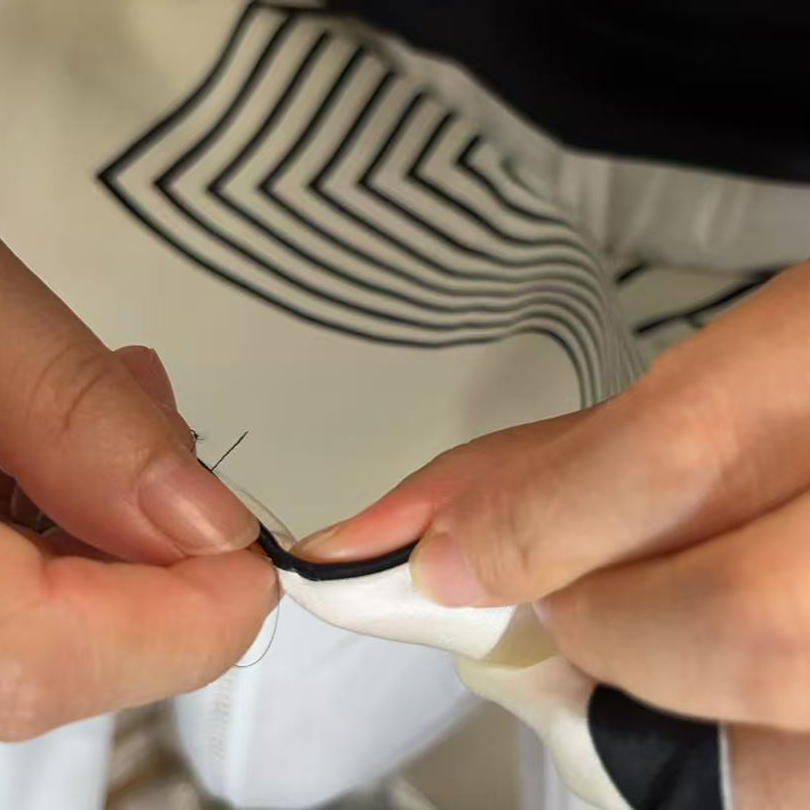
Hems are the part buyers notice last and wear out first. A hand-rolled hem is rolled and stitched by hand, which gives a soft edge that drapes with the scarf instead of standing up from it. It takes 1.5–1.6 cm of fabric on each side — which is why the hem allowance matters back in step 1.
Every piece is inspected individually — not sampled, not spot-checked. Colour, registration, hem, stains, size. Our scarves are made to FZ/T 43014-2018, the Chinese national standard for silk scarves and shawls, at the qualified grade.
These are the numbers we quote, not the best case:
| Quantity | Lead time |
|---|---|
| 1–10 pieces | 5–6 days |
| 500 pieces | 12–15 days |
| 1,000 pieces | 15–20 days |
Lead time starts when the deposit clears and you have approved the artwork — not when you first send the file.
Capacity runs at about 10,000 metres of fabric a month, roughly 11,000 scarves at 87 × 87 cm. The same line prints the single-piece order and the thousand-piece order — that is what makes one piece possible in the first place.
One exception on the calendar: the roughly 20 days around Chinese New Year sit outside the normal cycle. For orders landing in that window, lead time is confirmed against your actual dates rather than the table above.
We ship once the balance is paid, by international express, air or sea freight — on your account, or quoted from Dongguan. The order allows ±2% on quantity, and the balance is settled on what actually ships.
A short list, because it saves time on both sides: